
Knowing the best places to install a vending machine can make the difference between average sales and a highly profitable business. Whether you own a gym, café, restaurant, corporate office, hotel, or educational institution, choosing the right location directly impacts footfall, beverage sales, and monthly revenue. In this guide, we'll explore the best places to install a beverage vending machine and the key factors that contribute to long-term success.
The answer depends on more than simply finding a busy location.
A successful vending machine needs the right combination of customer demand, accessibility, suitable products, and consistent footfall. For example, a protein shake machine may perform well inside a fitness center, while a machine offering coffee, tea, and hot chocolate may be better suited to a corporate office.
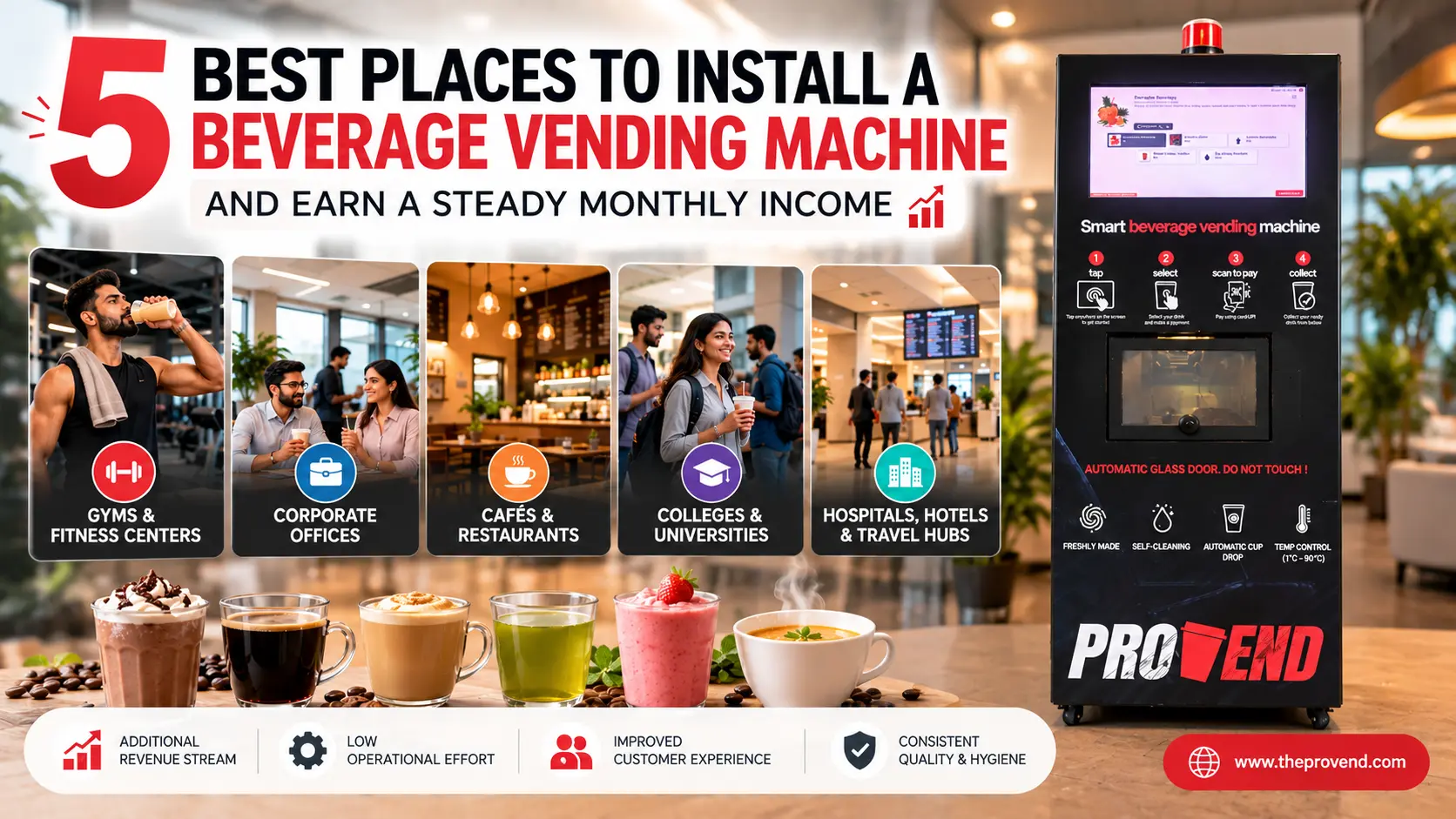
Image details
This infographic highlights the five best places to install a ProVend smart beverage vending machine, including gyms, corporate offices, cafés, restaurants, colleges, universities, hospitals, hotels, and travel hubs. It demonstrates how businesses can serve a variety of hot and cold beverages using compatible water-soluble premixes while improving customer experience, reducing operational effort, and creating an additional monthly revenue stream.
Explore this article 12 sections
Moreover, beverage vending machines offer an advantage over traditional packaged-product vending systems. Depending on their configuration, they can prepare both hot and cold beverages using compatible water-soluble powdered premixes.
As a result, businesses can offer beverages such as:
Protein shakes and fitness drinks
Hot and cold coffee
Tea and green tea
Hot chocolate
Electrolyte beverages
Lemon tea
Instant soups
Premix-based milkshakes
Malt beverages
This flexibility opens opportunities across multiple industries, including gyms, offices, cafés, restaurants, colleges, hotels, and healthcare facilities.
In this guide, we will explore the five best places to install a beverage vending machine, explain their business advantages, estimate potential monthly revenue, and share practical tips to help you select a profitable location in India.
Why Location Matters for a Vending Machine Business?
Choosing the right location is one of the most important factors in building a successful vending machine business.
A machine installed in a location with limited customer demand may generate only a few sales per day, even if it offers excellent beverages. Conversely, the same machine placed in a suitable environment with regular customers may achieve much stronger sales.
Therefore, before installing a beverage vending machine, you should evaluate the location carefully.
Important Factors to Consider
1. Daily Footfall
The number of people visiting a location directly affects the potential customer base. However, high footfall alone does not guarantee sales. The people visiting must also have a reason to purchase your beverages.
2. Customer Spending Habits
Different locations attract different audiences. For example, gym members may be willing to spend more on protein shakes, whereas college students may prefer budget-friendly coffee and refreshing drinks.
3. Repeat Customers
Locations with regular visitors can provide more predictable demand. Employees visiting an office five days a week or gym members following a workout routine may purchase beverages repeatedly.
4. Competition and Accessibility
If several inexpensive beverage counters already operate nearby, attracting customers may be challenging. On the other hand, a conveniently positioned self-service machine can provide an alternative when existing options are crowded or unavailable.
5. Electricity, Water, and Maintenance
A suitable installation location should support the machine's operational requirements, including power, water supply or refilling arrangements, ventilation, hygiene, and maintenance access.
6. Operating Hours
Locations open for longer hours may offer more selling opportunities. Nevertheless, actual revenue depends on purchasing activity, not simply how long the machine remains available.
Ultimately, a profitable location combines consistent footfall, genuine beverage demand, convenient access, and manageable operating costs.
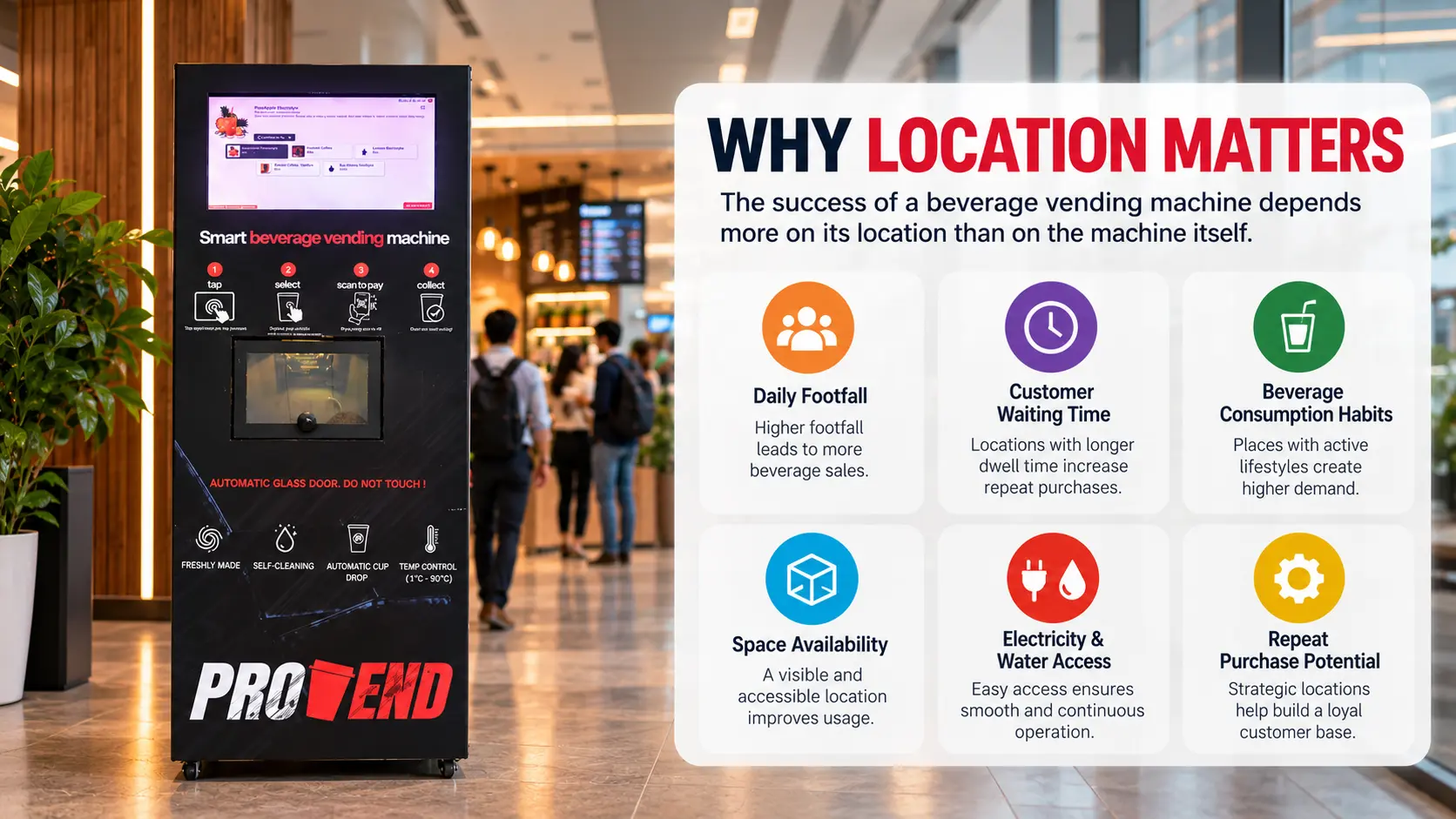
Image details
This infographic illustrates the key factors that influence the success of a commercial beverage vending machine. It highlights how daily footfall, customer waiting time, beverage consumption habits, available space, access to electricity and water, and repeat purchase potential contribute to higher sales and better business performance. Choosing the right location helps businesses maximize the value of automated beverage dispensing while improving customer convenience and operational efficiency
1. Why Gyms Are One of the Best Places to Install a Vending Machine
Gyms and fitness centers are among the most promising locations for beverage vending machines, particularly when the menu includes protein shakes, hydration products, and other fitness-oriented beverages.
Today, fitness enthusiasts pay attention to nutrition alongside their workout routines. Consequently, convenient access to post-workout beverages can be valuable for both members and gym operators.
However, not every gym has the space, budget, or staff required to operate a dedicated nutrition counter.
This creates an opportunity for automated beverage dispensing.
A smart beverage vending machine can prepare compatible powdered drink mixes with water and dispense them directly into a cup, helping customers purchase drinks without relying on a staffed shake counter.
What Beverages Can You Offer in a Gym?
Popular options may include:
Whey protein shakes
Mass gainer beverages
Electrolyte drinks
Compatible BCAA premixes
Black coffee
Cold coffee
Green tea
Lemon tea
The exact menu should depend on the machine's configuration, ingredient compatibility, and customer preferences.
Why Gyms Are a Good Location
Regular Customer Visits: Gym members commonly follow weekly workout schedules. This creates opportunities for repeat purchases.
Relevant Audience: A gym attracts people who may already be interested in protein shakes, hydration, and convenient fitness nutrition.
Limited Space Requirements: A vending machine can provide an additional beverage service without requiring a full-size café counter.
Additional Revenue Opportunities: Gym owners may generate beverage sales through a direct operating model or explore a revenue-sharing arrangement with a vending machine operator.
Convenient Service: Members can purchase beverages before or after workouts without having to bring premixes from home.
How Much Can a Gym Beverage Vending Machine Earn?
Consider a hypothetical gym with 250 active members.
Suppose the machine sells an average of 25 beverages per day at ₹80 per beverage.
Daily Revenue = 25 × ₹80 = ₹2,000
Monthly Revenue = ₹2,000 × 30 = ₹60,000
This represents approximately ₹60,000 in monthly gross sales, assuming the same daily sales throughout a 30-day month.
However, this is not the monthly profit. Ingredient costs, disposable cups, payment charges, electricity, servicing, and any rent or revenue-sharing expenses must be deducted.
Actual demand may also vary between weekdays, weekends, and seasonal periods.
Nevertheless, gyms with an engaged member base and a carefully selected beverage menu can offer a practical opportunity for vending machine operators.
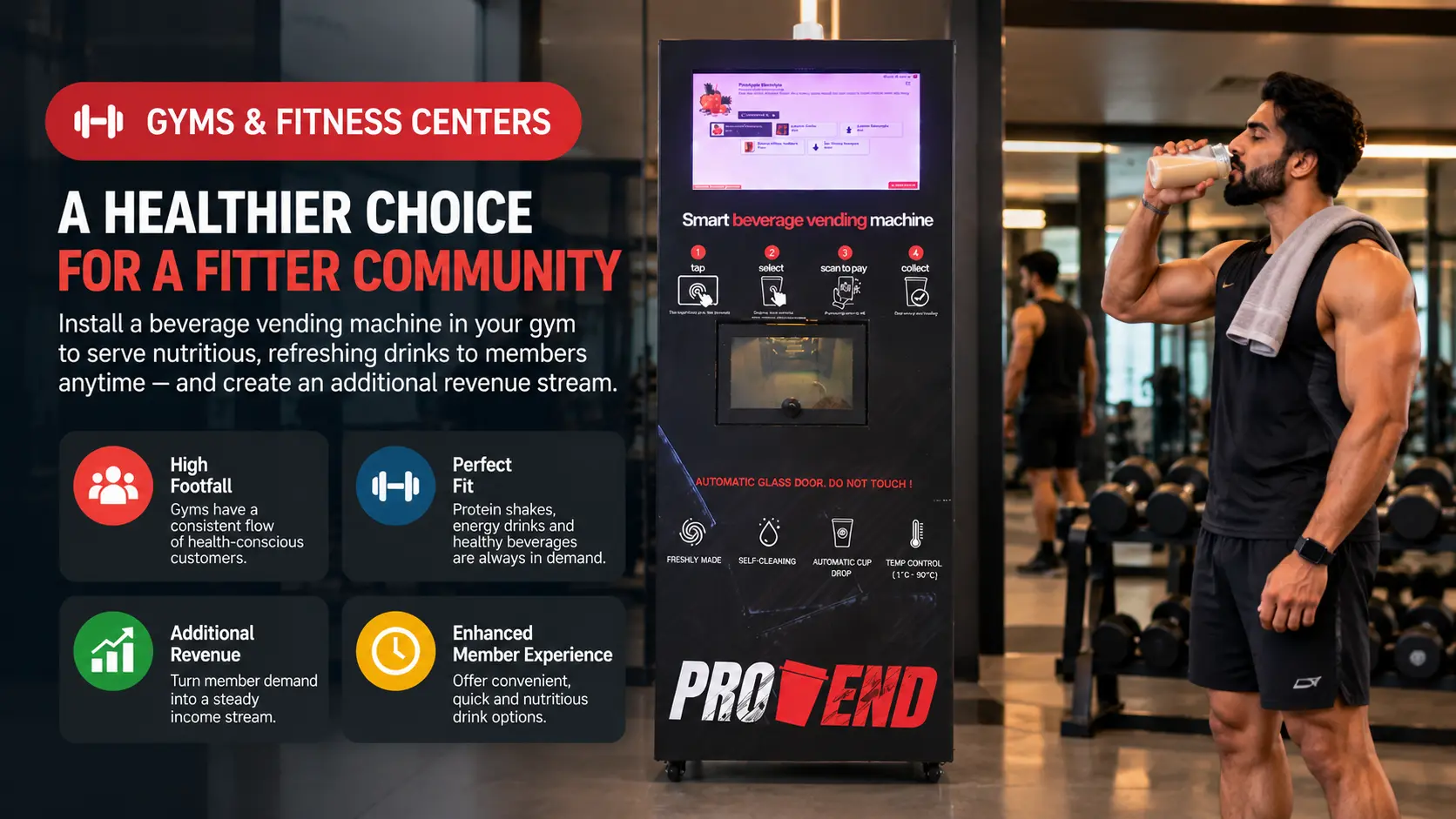
Image details
This image showcases a ProVend smart beverage vending machine installed in a modern gym environment. Designed for gyms and fitness centers, it enables members to purchase freshly prepared protein shakes, coffee, electrolyte drinks, and other beverages within seconds. By automating beverage preparation, gyms can reduce waiting times, maintain consistent quality, and generate an additional source of revenue without increasing operational complexity.
2. Why Corporate Offices Are Ideal Places to Install a Vending Machine
Corporate offices are another promising location for commercial beverage vending machines.
Throughout the workday, employees frequently consume coffee, tea, and other refreshments. Whether during morning meetings, lunch breaks, or late working hours, convenient beverage access can improve the workplace experience.
Traditionally, companies have relied on pantry staff, external cafés, or basic coffee machines to meet these needs.
However, automated beverage dispensing offers another option.
A smart beverage station can provide employees with self-service access to a selection of hot and cold beverages, depending on the machine's available ingredients and configurations.
Best Beverage Options for Corporate Offices
Hot coffee
Cold coffee
Tea
Green tea
Lemon tea
Hot chocolate
Protein drinks
Malt beverages
Furthermore, businesses can customize the beverage menu based on employee preferences, workplace policies, and seasonal demand.
Why Corporate Offices Are an Ideal Location
Predictable Audience: Unlike public locations where visitor numbers may fluctuate significantly, offices generally have an identifiable employee population.
Multiple Consumption Occasions: Employees may purchase beverages during morning breaks, after lunch, or while working late.
Reduced Manual Preparation: Self-service beverage machines can reduce routine beverage preparation tasks, allowing pantry staff to focus on other responsibilities.
Workplace Convenience: Employees can access beverages without leaving the office premises.
Flexible Payment Models: Depending on the commercial arrangement, beverages may be sold directly to employees or provided through an employer-subsidized system.
Revenue Opportunity in Corporate Offices
Suppose an office beverage machine sells 50 drinks per working day at an average price of ₹40.
Daily Revenue = 50 × ₹40 = ₹2,000
Assuming 22 working days:
Monthly Revenue = ₹2,000 × 22 = ₹44,000
This example illustrates possible gross beverage sales, not guaranteed earnings.
Additionally, not every corporate installation will operate through direct customer payments. Some companies may prefer to purchase beverages as an employee benefit or arrange a service contract.
Therefore, before installing a vending machine in an office, it is important to understand whether the goal is direct sales, employee convenience, or a combination of both.
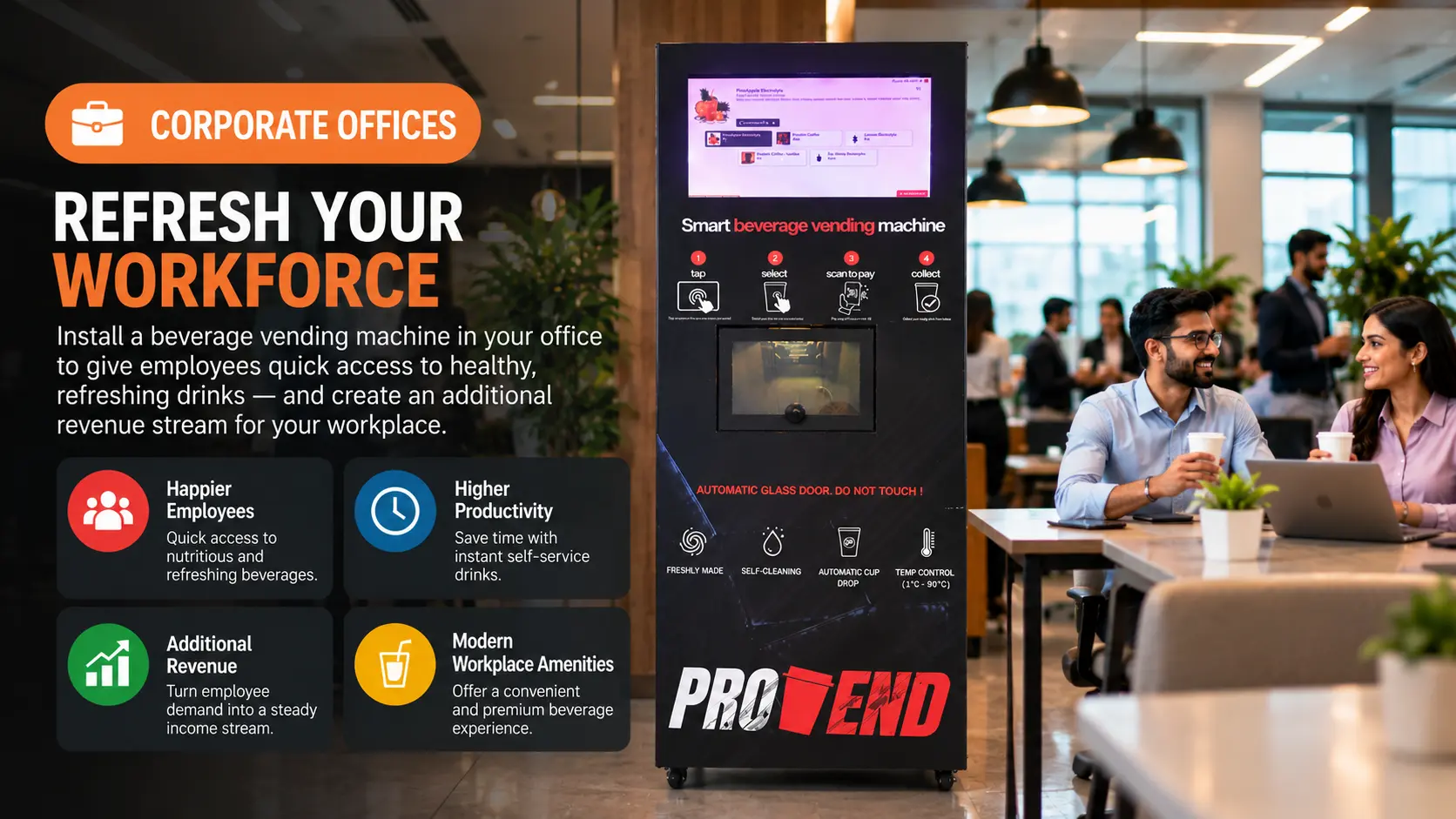
Image details
This image showcases a ProVend smart beverage vending machine in a modern corporate office environment. It demonstrates how businesses can offer employees quick access to freshly prepared coffee, tea, protein shakes, hot chocolate, and other hot and cold beverages using compatible water-soluble premixes. A self-service beverage station helps improve employee convenience, reduce pantry workload, and create a modern workplace experience while maintaining consistent beverage quality.
3. Why Cafés & Restaurants Are Great Places to Install a Beverage Vending Machine
Cafés and restaurants are often overlooked when discussing the best places to install a vending machine.
However, they can offer substantial opportunities for commercial beverage automation.
Unlike gyms and offices, these establishments already serve customers who expect beverages as part of their dining experience.
For example, a customer ordering a sandwich might also purchase a cold coffee, while someone visiting during winter may prefer hot chocolate or soup.
Therefore, adding suitable beverage options can increase the average transaction value.
The challenge, however, is that expanding a beverage menu may require additional equipment, staff training, ingredients, and preparation time.
This is where automated beverage dispensing can be useful.
How Can a Beverage Vending Machine Help Cafés and Restaurants?
A beverage vending machine can prepare drinks from compatible water-soluble premixes, helping operators standardize portions and reduce repetitive manual preparation.
For businesses with limited counter space, a multi-beverage system may also be more practical than managing several separate preparation stations.
Popular Beverages for Cafés and Restaurants
Hot coffee
Cold coffee
Cappuccino-style premix beverages
Hot chocolate
Lemon tea
Green tea
Instant soups
Milkshake premixes
Protein shakes
Seasonal specialty beverages
Importantly, these beverages must use formulations that are compatible with the machine. A premix-based dispenser is not a replacement for every freshly brewed, blended, or handcrafted café beverage.
Business Advantages
Faster Beverage Preparation: Automation can reduce repetitive preparation steps during busy service periods.
Consistent Portioning: Programmed recipes can help control ingredient quantities and maintain consistency.
Menu Expansion: Restaurants can introduce suitable beverages without creating a separate preparation workflow for each one.
Lower Ingredient Waste: Controlled dispensing can help reduce overpouring and inconsistent serving sizes.
Potential Upselling: Beverages can be included in meal combinations, promotional offers, or seasonal menus.
Revenue Opportunity for Cafés and Restaurants
Imagine a café selling 40 additional premix-based beverages daily at an average selling price of ₹70.
Daily Revenue = 40 × ₹70 = ₹2,800
Monthly Revenue = ₹2,800 × 30 = ₹84,000
This is a hypothetical gross revenue example.
The actual additional revenue depends on how many purchases are genuinely incremental rather than replacing existing drink sales. Profitability also depends on ingredient costs, pricing, maintenance, and the café's operating model.
For cafés and restaurants, the main advantage may not always be direct vending income. Instead, the greatest value can come from faster service, more consistent preparation, and the ability to offer additional beverages without excessive operational complexity.
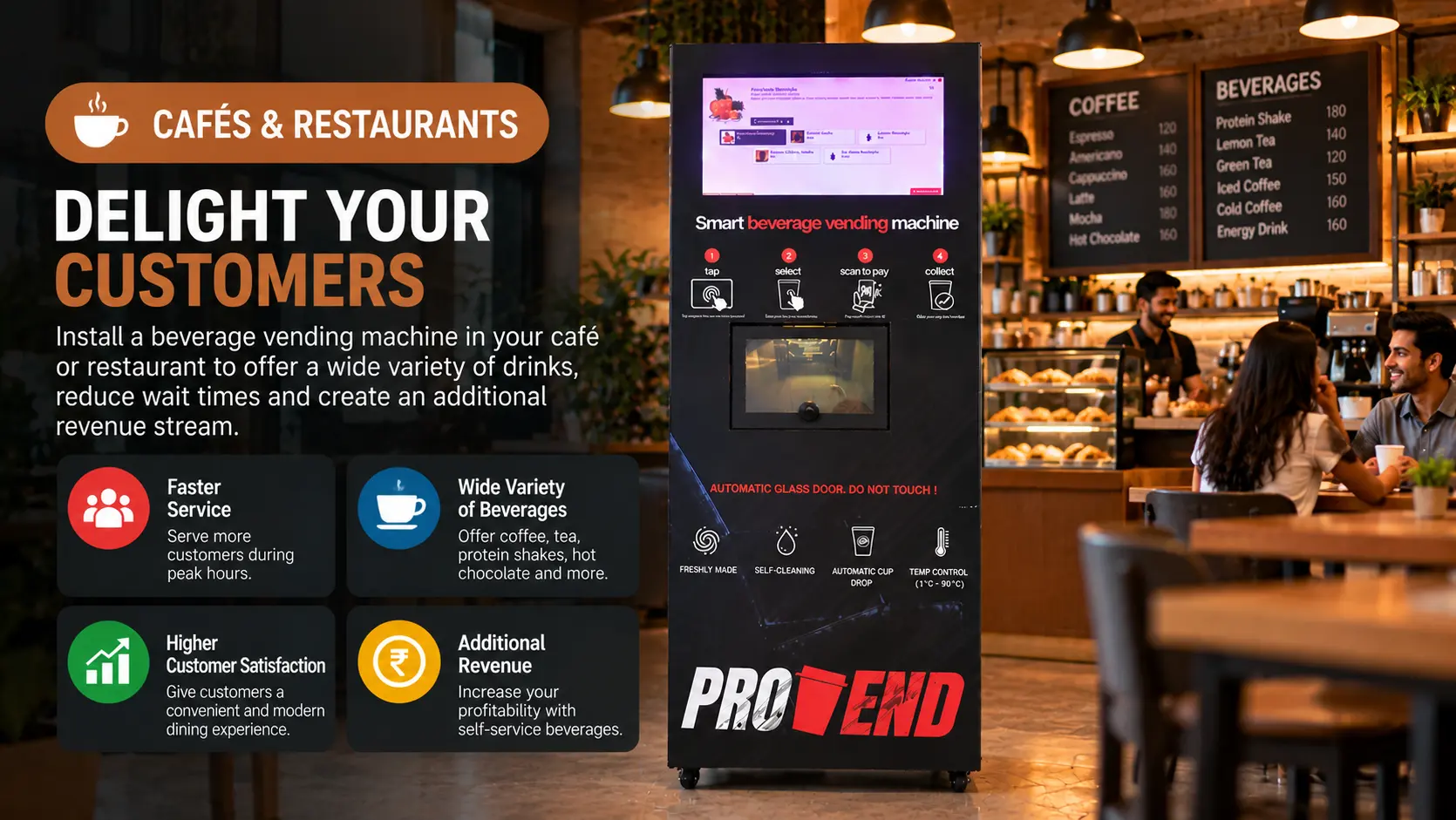
Image details
This image features a ProVend smart beverage vending machine installed in a modern café and restaurant environment. It demonstrates how food service businesses can automate beverage preparation and serve a wide range of hot and cold drinks using compatible water-soluble premixes. From coffee, tea, and hot chocolate to protein shakes, soups, and specialty beverages, a single machine helps reduce preparation time, maintain consistent quality, improve customer satisfaction, and create an additional
4. Why Colleges & Universities Benefit from Beverage Vending Machines
Colleges and universities can be attractive locations for vending machine businesses because thousands of students, faculty members, and staff may spend several hours on campus.
During class breaks, students often look for affordable refreshments that can be purchased quickly.
However, college cafeterias may experience long queues, especially during lunch hours and between lectures.
As a result, strategically placed beverage vending machines can provide an additional self-service option.
Best Beverages for College Campuses
Cold coffee
Hot coffee
Tea
Lemon tea
Hot chocolate
Electrolyte drinks
Compatible protein beverages
Seasonal cold beverages
Pricing is particularly important in educational environments.
Although premium drinks may attract some customers, affordable options are often essential for encouraging repeat purchases.
Why College Campuses Offer Revenue Potential
Large Customer Base: Educational institutions bring together students, teaching staff, and administrative employees.
Repeat Purchases: Students frequently return to the same campus throughout the academic term.
Convenience: A well-positioned vending machine can offer quick beverage access between classes.
Seasonal Menu Flexibility: Hot beverages may attract greater interest during cooler months, while cold coffee and refreshing drinks may be preferred in warmer weather.
Multiple Installation Opportunities: Larger campuses may support machines near libraries, hostels, cafeterias, sports facilities, and common areas.
What Should You Consider Before Installation?
Colleges can have significant variations in daily attendance and operating schedules.
For example, semester breaks, examinations, holidays, and weekends may reduce demand.
Additionally, the institution may require permission, vendor registration, revenue sharing, or compliance with campus food service rules.
Therefore, rather than evaluating footfall alone, operators should estimate average beverage sales across the full academic year.
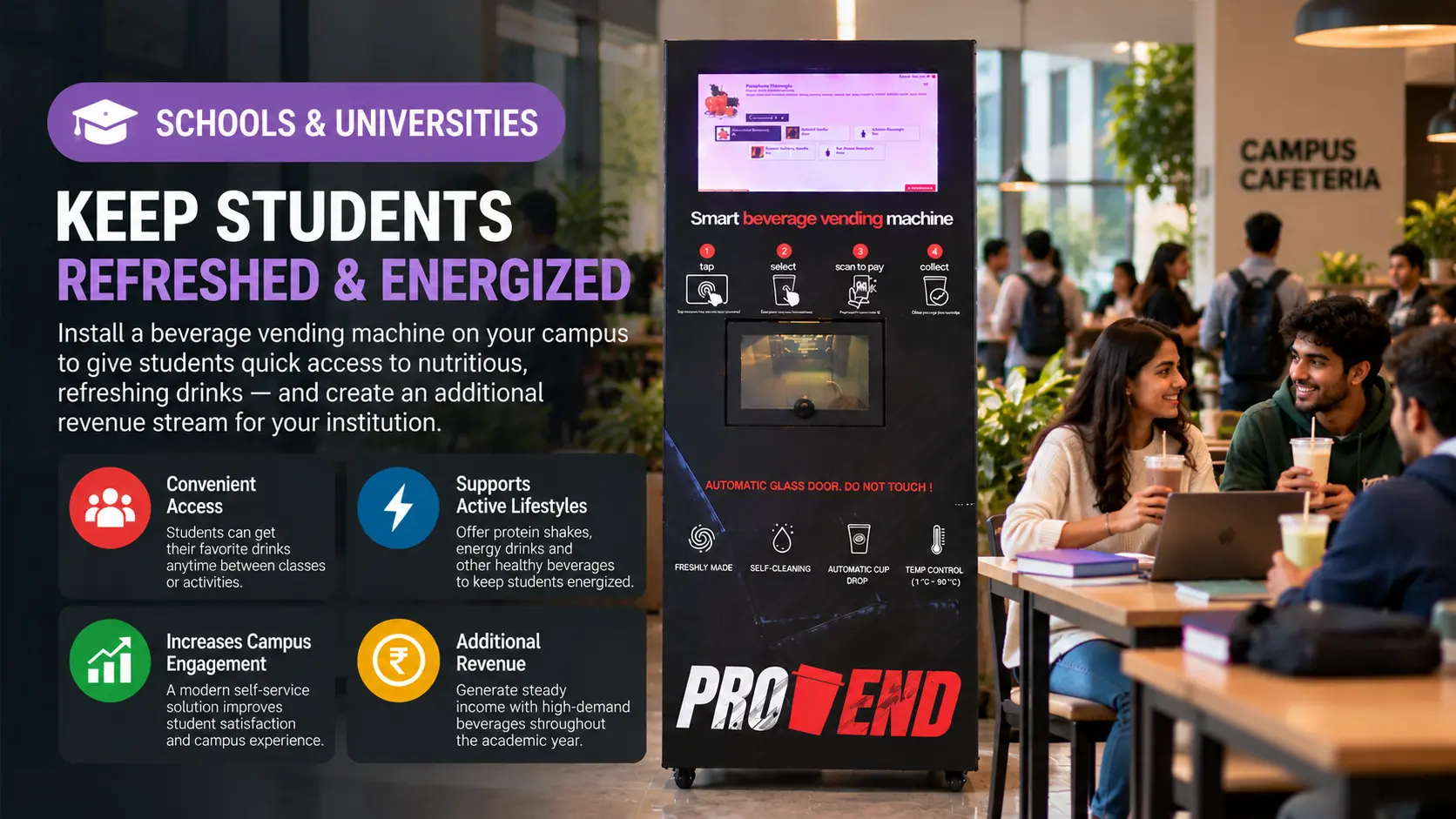
Image details
This image showcases a ProVend smart beverage vending machine in a modern college or university campus. Designed for educational institutions, it enables students, faculty, and staff to enjoy freshly prepared beverages such as coffee, tea, protein shakes, hot chocolate, electrolyte drinks, and other water-soluble premix-based beverages. The self-service system helps reduce cafeteria queues, improve campus convenience, and provide beverages quickly while creating an additional source of revenue f
5. Why Hospitals, Hotels & Travel Hubs Are Perfect for Beverage Vending Machines
Hospitals, hotels, airports, railway stations, and major transport facilities often have customers who need refreshments outside conventional meal times.
For example, hospital attendants may require coffee during late-night waiting periods, while hotel guests may want a convenient drink before leaving early in the morning.
Similarly, travelers may prefer a quick beverage instead of joining a long queue.
Consequently, these locations can benefit from automated self-service beverage solutions.
Ideal Beverage Options
Depending on the location and customer needs, suitable beverages may include:
Hot coffee
Tea
Green tea
Lemon tea
Hot chocolate
Instant soups
Electrolyte beverages
Other compatible premix-based drinks
Why These Locations Can Be Profitable
Extended Operating Hours: Some facilities remain active throughout the day and night, creating opportunities beyond regular business hours.
Convenience: Customers may value a beverage option that is accessible near waiting areas, lounges, or common spaces.
Different Customer Groups: Hospitals serve staff, visitors, and attendants, while hotels serve guests and employees. Travel hubs attract passengers and on-site workers.
Automated Service: A vending machine can reduce dependency on staffed beverage counters during quieter hours.
Multiple Potential Placement Areas: Large properties may have several suitable installation zones.
Important Considerations
Not all high-footfall locations are equally accessible to vending machine operators.
Airports, railway stations, hospitals, and large hotels may require formal contracts, tender participation, licensing, or location-specific approvals.
Additionally, food safety, sanitation, access control, machine maintenance, and customer support are especially important in these environments.
In healthcare settings, particular care should be taken with beverage suitability, ingredient labeling, and allergen information.
With the right permissions and service arrangements, these locations can provide meaningful opportunities for commercial beverage vending.
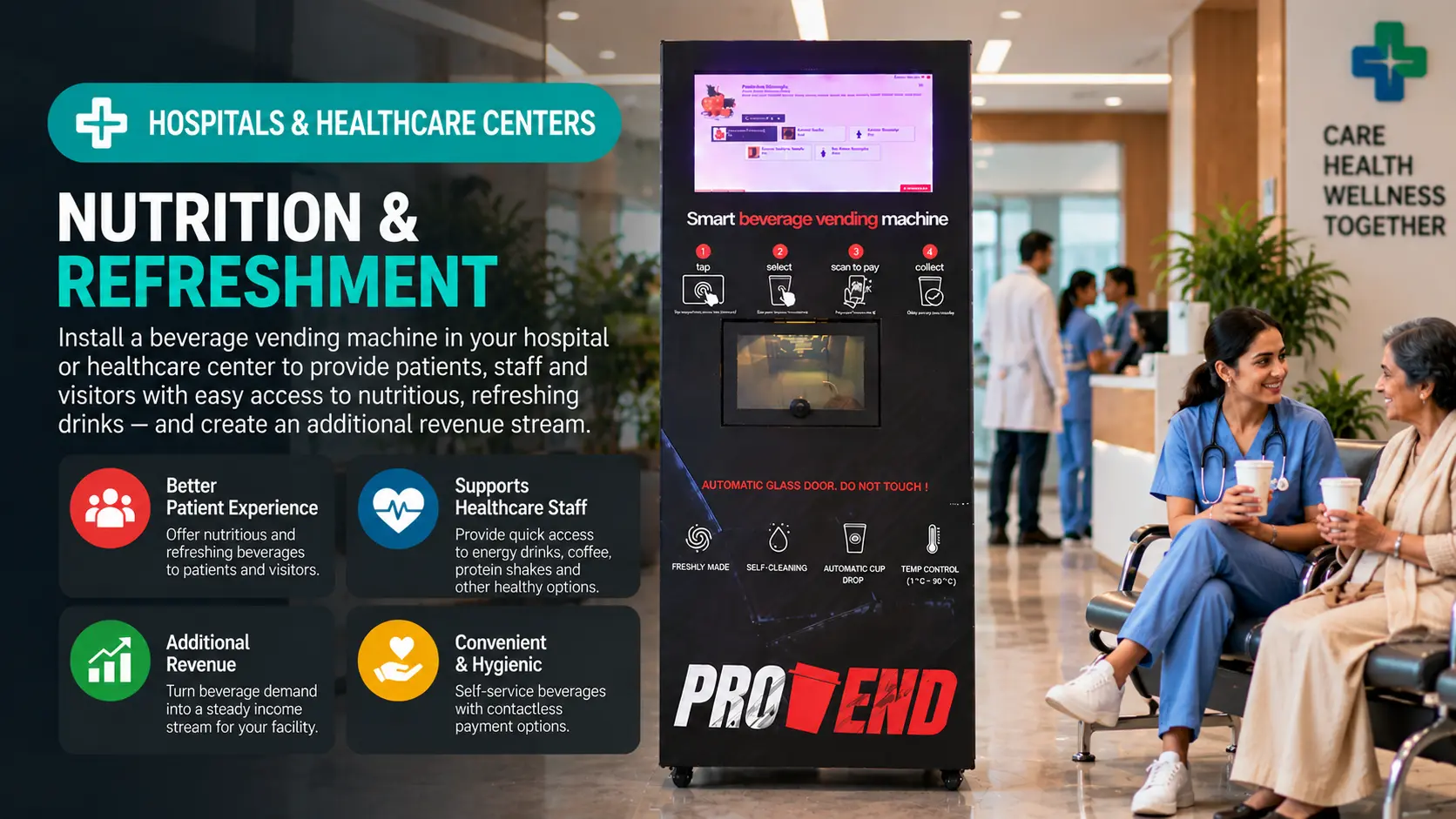
Image details
This image showcases a ProVend smart beverage vending machine installed in a modern hospital environment. Designed for high-footfall locations, it enables patients, visitors, and healthcare professionals to enjoy freshly prepared coffee, tea, hot chocolate, soups, protein shakes, electrolyte drinks, and other beverages made from compatible water-soluble premixes. The self-service solution helps improve convenience, maintain hygiene, reduce waiting times, and support 24/7 beverage availability.
How Much Monthly Income Can a Beverage Vending Machine Generate?
One of the most common questions among potential vending machine operators is:
How much money can I earn from a vending machine every month?
The answer depends on several variables, including the number of beverages sold, selling price, ingredient cost, site charges, and operating expenses.
To understand the potential, consider the following hypothetical examples.
Average Daily Sales | Price Per Beverage | Monthly Gross Revenue |
|---|---|---|
25 cups | ₹50 | ₹37,500 |
40 cups | ₹50 | ₹60,000 |
60 cups | ₹60 | ₹1,08,000 |
80 cups | ₹50 | ₹1,20,000 |
120 cups | ₹60 | ₹2,16,000 |
Calculations assume 30 operating days per month with consistent average daily sales. These figures are illustrative and are not actual ProVend machine earnings or guaranteed returns.
Revenue vs Profit: Understand the Difference
Revenue is the total money collected from beverage sales.
Profit, however, is what remains after deducting expenses.
Common operating expenses include:
Beverage premix ingredients
Disposable cups and consumables
Electricity and water
Rent or location commission
Machine cleaning and maintenance
Payment processing fees
Refilling and servicing expenses
Equipment depreciation or financing costs
For example, suppose your machine generates ₹1,20,000 in gross monthly revenue.
If ingredients and consumables cost ₹48,000, and other operating expenses total ₹30,000, the remaining amount would be:
₹1,20,000 − ₹48,000 − ₹30,000 = ₹42,000
This leaves ₹42,000 before any additional costs not included in the example, such as taxes, depreciation, loan interest, or owner compensation.
Consequently, your actual net profit may be lower.
The most effective approach is to prepare a realistic financial projection before purchasing or installing a machine.
How to Choose the Best Vending Machine Location in India
Finding a busy location is only the beginning.
Before finalizing a site, carry out a simple feasibility assessment.
1. Understand the Target Audience
Identify who will purchase beverages from your machine.
A gym audience may prefer protein shakes, while office employees may purchase coffee and tea more frequently.
Matching the menu to the audience is essential.
2. Study Existing Competition
Check whether cafés, canteens, juice counters, or other vending machines already operate nearby.
Competition is not necessarily negative. However, your machine should offer a clear convenience, pricing, availability, or product advantage.
3. Estimate Daily Beverage Demand
Do not assume that every visitor will become a customer.
Instead, estimate realistic purchases per day and test different scenarios.
For example, compare projections based on 20, 40, and 60 daily sales before making an investment decision.
4. Calculate Your Break-Even Point
Calculate your contribution per cup by subtracting variable costs from the selling price.
Then determine how many cups you must sell to cover monthly fixed expenses.
This helps establish whether the location is commercially viable.
5. Confirm Installation Requirements
Check electricity availability, water arrangements, machine dimensions, ventilation, internet connectivity if needed, and access for refilling and servicing.
Also confirm the property owner's permission and applicable food safety requirements.
6. Evaluate Visibility and Convenience
A machine placed near a regularly used entrance, break area, or waiting zone may attract more customers than one installed in an isolated corner.
Therefore, selecting the exact position within a property can be as important as selecting the property itself.
Why Multi-Beverage Vending Machines Offer Greater Flexibility
One limitation of some beverage dispensing systems is their restricted product range.
For example, a machine designed only for coffee may not be suitable for a gym looking to offer protein shakes and electrolyte drinks.
However, a configurable multi-beverage dispensing system can provide additional flexibility.
Solutions such as those developed by ProVend are designed around automated beverage service, allowing businesses to explore different compatible premix-based beverage offerings.
Where supported by the machine's configuration, operators can serve hot or cold drinks by mixing soluble powdered ingredients with water.
For instance, the same commercial location may benefit from different beverage categories throughout the day.
Morning: Coffee, tea, and hot chocolate
Afternoon: Cold coffee, electrolyte drinks, and protein shakes
Evening: Tea, soup, and other suitable beverages
Nevertheless, the number of beverages offered simultaneously depends on factors such as canister capacity, recipe settings, dispensing hardware, and machine configuration.
The primary advantage is that businesses can select beverages according to customer preferences instead of being limited to one fixed category.
This can make the machine useful across multiple commercial environments, including gyms, corporate offices, cafés, restaurants, colleges, hotels, and other high-footfall locations.
Frequently Asked Questions
What is the best place to install a vending machine?
The best place depends on customer demand, footfall, beverage preferences, and operating expenses. Gyms, corporate offices, cafés, restaurants, colleges, and hospitals are promising options for beverage vending machines when the machine's products match the location's audience.
Can a vending machine generate ₹50,000 per month?
Yes, generating ₹50,000 in monthly gross sales is mathematically possible. For example, selling approximately 34 beverages per day at ₹50 each for 30 days produces ₹51,000 in revenue. However, this does not mean ₹50,000 in profit, and actual sales are not guaranteed.
Can beverage vending machines serve both hot and cold drinks?
Yes. A configurable beverage dispensing system can prepare both hot and cold drinks using compatible water-soluble premixes. Depending on the machine setup, businesses can offer coffee, tea, protein shakes, hot chocolate, soups, and other suitable beverages through one automated platform.
Is a vending machine business profitable in India?
A vending machine business can be profitable in India when customer demand, product pricing, ingredient costs, and location expenses are managed effectively. However, profitability varies between locations, so operators should calculate expected sales and operating costs before investing.
Do beverage vending machines require staff?
Beverage vending machines can operate through automated preparation and dispensing, reducing the need for staff to prepare every drink. However, they still require ingredient refilling, cleaning, inspections, troubleshooting, and periodic maintenance.
Can vending machines be installed inside cafés and restaurants?
Yes. With the property owner's approval and suitable infrastructure, a beverage dispensing machine can be installed in cafés and restaurants. It can help automate compatible premix-based drinks, support faster preparation, and expand the available beverage menu.
How do I select drinks for my vending machine?
Start by studying the preferences and spending habits of people who regularly visit the location. Then select compatible beverage premixes based on demand, taste, price, ingredient cost, machine configuration, and seasonal preferences.
What should I check before buying a beverage vending machine?
Evaluate the machine's beverage compatibility, heating and cooling capabilities, ingredient capacity, dispensing consistency, payment options, cleaning requirements, warranty, after-sales support, and expected operating costs.
Also ask the supplier for a live demonstration using the beverages you plan to sell.
Final Thoughts: Choosing the Right Vending Machine Location
Installing a beverage vending machine can help businesses create an additional revenue stream while providing customers with convenient access to refreshments.
However, choosing the right location is essential.
Gyms are particularly suitable for protein shakes and fitness beverages, while corporate offices may offer predictable demand for coffee and tea.
Similarly, cafés and restaurants can use beverage automation to support menu expansion, whereas colleges and universities provide opportunities to serve large groups of students.
Hospitals, hotels, and travel hubs may also offer attractive prospects because of their extended operating hours and varied customer needs.
Ultimately, the best places to install a vending machine are those where the right beverages meet consistent customer demand at a commercially viable cost.
Before investing, evaluate the target audience, expected daily sales, ingredient expenses, machine capabilities, site permissions, and ongoing maintenance requirements.
A thoughtful location strategy and a suitable beverage menu can make a meaningful difference to the long-term performance of your vending machine business.
Looking for a Smart Beverage Vending Solution for Your Business?
Whether you're planning to introduce protein shakes in a gym, automate coffee service in a corporate office, expand the drinks menu of a café, or provide convenient refreshments in a commercial space, choosing the right beverage dispensing system is an important first step.
ProVend offers smart vending and beverage dispensing solutions designed for modern commercial environments.
Explore how beverage automation can fit your location, audience, and operational goals.
Explore ProVend Beverage Vending Solutions
Find the right beverage solution for your business.